Vietnam's Ultimate Night Markets Guide
Dive into Vietnam's lively night scenes. Learn where to feast, shop, and wander without missing the magic.
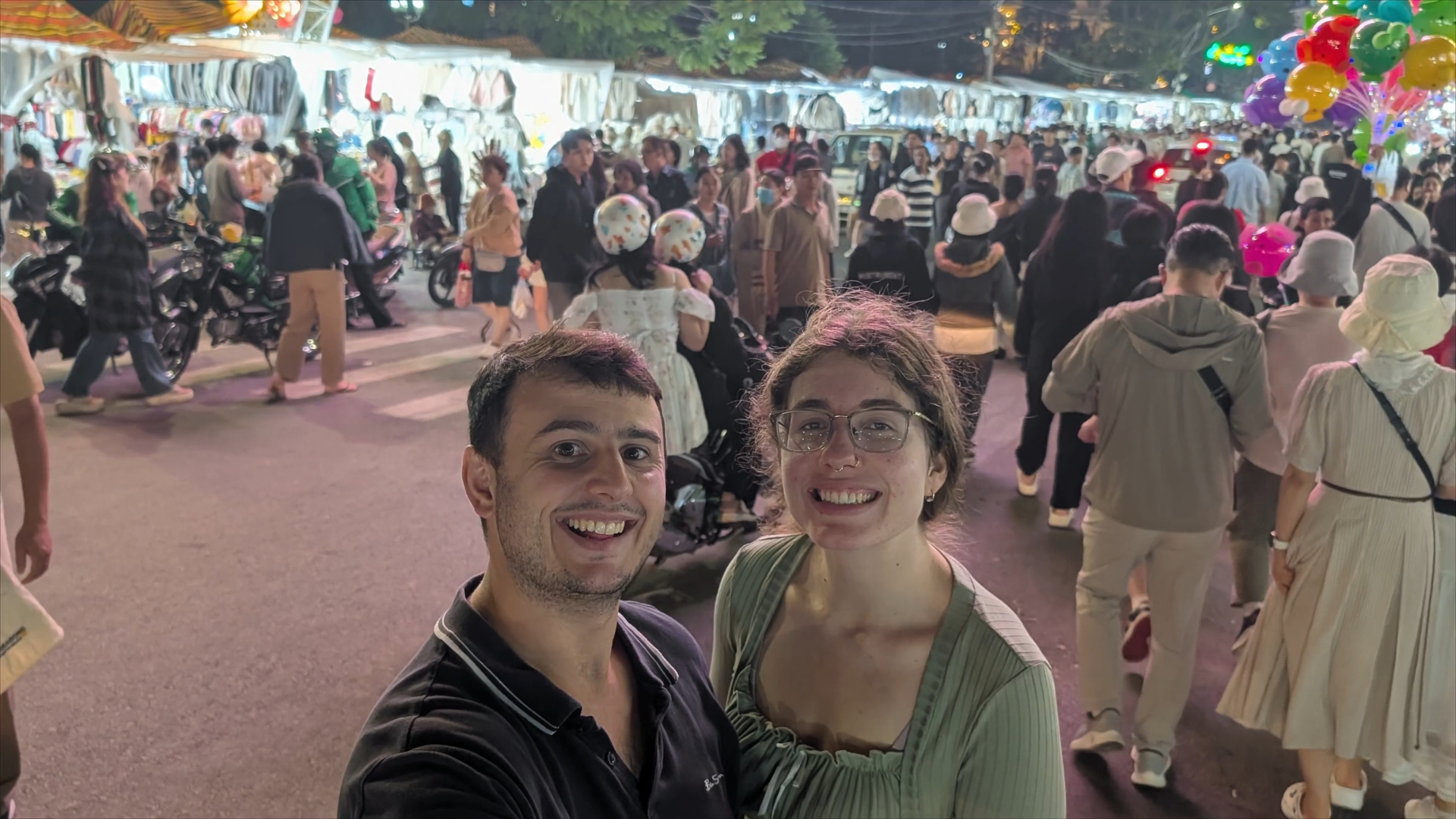
Night markets are one of the first things people ask us about when they land in Vietnam. Where do you actually go? What do things cost? And which ones are worth an evening versus which ones are mostly tourist shirts?
We have lived in Vietnam since 2023 and spent a lot of evenings wandering these markets for dinner, last-minute gifts, and sometimes just a sugarcane juice and a walk. This guide covers the night markets we send people to, what you will find, rough prices, and the little things that make the visit easier.
We have included the well-known stops, plus a few that most itineraries skip: Hanoi's weekend night market, a more local one in District 5, and Dong Van if you are on the Ha Giang Loop.
Who this is for: first-timers who want one good night market per city, food-first travellers, and anyone trying to shop without overpaying.
Perfect For
What You Will Usually Find (and What It Costs)
Most night markets are a mix of street food, cheap clothes, souvenirs, and a bit of local produce. The vibe changes by city, Ho Thi Ky is almost all food, Hoi An is lanterns and gifts, Da Lat is jackets and strawberries, but the usual stall types repeat.
Treat these as rough, post-haggle ranges. First prices at tourist-facing stalls can sit a lot higher, especially in Hoi An and anywhere near a big hotel strip.
- Street food snacks and skewers: 15,000-40,000 VND ($0.60-$1.60). Grilled pork, seafood sticks, bánh tráng nướng, fried bits on a stick.
- A proper plate or bowl: 30,000-70,000 VND ($1.20-$2.80). Noodles, bánh mì, cơm tấm, a small seafood plate.
- Fruit cups and drinks: 10,000-30,000 VND ($0.40-$1.20). Sugarcane, fresh coconut, strawberry cups in Da Lat.
- T-shirts and light clothes: 80,000-180,000 VND ($3-$7). Fun prints are usually better value than anything pretending to be a brand.
- Bags, jackets, fake branded bits: 100,000-400,000 VND ($4-$16). Check zips, stitching, and soles before you hand over cash.
- Small souvenirs: 15,000-50,000 VND ($0.60-$2). Magnets, fans, keyrings. Buy a few from the same stall and ask for a better price.
- Seafood in Phu Quoc or Nha Trang: often 100,000-300,000 VND ($4-$12) depending on what you point at. Confirm the price before it hits the grill.
If someone quotes you double this for a fridge magnet, smile and keep walking. There is always another stall. For daytime market prices and haggling phrases, our Vietnamese markets guide is the more detailed companion to this one.
Best Night Markets in Vietnam
Ho Chi Minh City
Ho Thi Ky Night Market
This is the night market we send people to first in Ho Chi Minh City. It is more of a food street than a shopping market. The streets stuffed full of vendors serving delicious grilled skewers, noodles, seafood, and a row of flower stalls that make the whole place look better than it smells (in a good way). Stalls start filling out from around 5pm and it stays busy until late.
Get there on the earlier side if you want a seat at the better stalls. Once it is packed, you will be hovering with a plate in your hand. Eat where the line is moving. That usually beats the empty stall with the big English menu.
If you would rather hop on the back of a bike than pick your way through the stalls on your own, there is a women-led motorbike street food tour that includes Ho Thi Ky. The guides wear áo dài and take you to the spots they actually eat at, not just the ones aimed at visitors.
👉 Our favorite Ho Thi Ky Food Tour. Women-led motorbike street food tour visiting Ho Thi Ky. Guides in traditional Vietnamese dress, favourite local spots.
District 5 Night Market
If Ho Thi Ky is the food street most travellers hear about, District 5 is the one locals still actually use. The night market around Hòa Bình / Bạch Vân sits in Chinatown, so the food leans Chinese-Vietnamese: bánh bao, sủi cảo, mì xào, xôi gà, plus the usual grilled bits. Dishes are usually 20,000-50,000 VND ($0.80-$2).
It is less polished and less English-speaking than Ho Thi Ky, which is exactly the point. Drop a pin near Bún Kiên Giang and wander from there. You will eat well, you will not be fighting tour groups for a plastic stool.
Hanoi
Hanoi Weekend Night Market
This one only runs Friday, Saturday and Sunday, which is why it is easy to miss if you are in Hanoi midweek. The stalls take over Hang Dao Street and stretch up toward Dong Xuan Market, so the Old Quarter turns into one long walking street of clothes, souvenirs, snacks, and the odd live singer. Hours are roughly 6pm to midnight.
It is busy. Really busy after 8pm. Go closer to 6.30-7.30pm if you want space to browse, or later if you want the full chaotic atmosphere. Prices sit a bit higher than weekday markets, so compare a couple of stalls before you buy. A t-shirt should still land around 80,000-150,000 VND if you haggle.
We usually treat this as a wander-and-eat evening rather than a serious shopping trip, then go back to Dong Xuan or Hang Bong in the daytime if we actually want to buy something. Our Hanoi shopping guide has the daytime spots we use.
Da Lat
Da Lat Night Market
Da Lat is the one night market where buying a cheap fleece is a practical decision, not just a souvenir. The temperature drops after dark, so the stalls fill up with jackets, woolies, strawberries, nuts, and warm snacks. It usually runs from about 6pm to midnight along Nguyen Thi Minh Khai, right in the centre.
We come for grilled corn, a strawberry cup, and a warm tofu drink when during the colder months. Clothes here are some of the better-value options in Vietnam, roughly around 150,000-350,000 VND ($6-$14) for a decent jacket if you check the quality. The strawberries are the thing people actually take back to the hotel.
Hoi An
Hoi An Night Market
Hoi An is the prettiest night market on this list. Lanterns, the river, bags, souvenirs, and food stalls from around 5pm to 11pm. It is also one of the more expensive. First prices can be silly, so walk the strip once before you buy anything.
For clothes and tailoring you will usually do better in the daytime shops, and our Hoi An tailor guide is the better starting point for that. Arrive after dark if you want the lanterns lit. Arrive a bit earlier if you want to eat before the tour groups fill the stools.
Phu Quoc
Phu Quoc Night Market
The seafood is the reason to come. Duong Dong night market (often just called Phu Quoc Night Market) runs from around 5pm to midnight, with fish and squid grilled on the spot, candy, fish sauce, and a lot of matching family shirts. Point at what you want, confirm the price before they throw it on the grill, and expect to haggle a little.
A mixed seafood plate for two often lands somewhere in the $8-15 range if you are paying attention. The fish sauce makes a better souvenir than another fridge magnet. If you are staying further south in the resorts, it's an easy Grab ride there and back, but a bit too far for a walk.
Nha Trang
Nha Trang Night Market
Easy to combine with a walk along the beach. Same tourist-market mix of souvenirs, cheap accessories, graphic tees, and the occasional pearl stall. It starts filling out around 6pm and runs late.
The food is fine and the shopping is average. We go for the atmosphere more than a specific stall. If you want dried fish or snacks to take home, compare two or three places to get a feel for the prices. We highly recommend a beach walk first, then the market as it's a nicer evening than treating it as a destination on its own.
Ha Giang
Dong Van Night Market
This is a bonus, not a reason to change your route. If you are doing the Ha Giang Loop, Dong Van Old Town puts on a small night market in the evenings, which gets A LOT busier on weekends, with highland snacks, brocade, local honey, and corn wine. It is not Hoi An. It is a few streets of stalls after a long day on the bike, which is why we like it.
Do not mix it up with the Sunday morning ethnic market, which is a completely different (and worth seeing) daytime thing. Most 3-day loop tours overnight in Dong Van, so you can wander after dinner without adding extra travel. Prices are local: snacks for a dollar or two, small textiles if something actually catches your eye.
A Few Things That Make Night Markets Easier
These are the habits we actually use, rather than a list of generic market rules:
- Bring cash in small notes. 20k, 50k and 100k notes make haggling less awkward. Plenty of stalls still will not take cards, and the ones that do sometimes add a fee.
- Haggle on clothes and souvenirs, not always on food. If a bowl already has a price on a board, just pay it. If someone quotes you 250,000 VND for a t-shirt, you are in a conversation.
- Stay friendly and be ready to walk away. There are almost always three stalls selling the same jacket. Walking off a bit slower than usual still works surprisingly often.
- Check quality before you pay. Zips, stitching, soles, and whether that "leather" bag smells like a plastic bag. Night-market lighting is not flattering to cheap glue.
- Wear shoes you can stand in. You will be on your feet, the ground is uneven, and you will step in something at least once.
- Eat at the busy stalls. High turnover is still the simplest food-safety filter we use. For the wider picture on food worries, we wrote it up in our Vietnam safety concerns guide.
Frequently Asked Questions
Which night market is best for food?
Ho Thi Ky in Ho Chi Minh City if you want the well-known street-food hit. District 5 if you want something more local. Phu Quoc if seafood is the whole point of the evening.
Which one is best for shopping?
Hanoi's weekend night market and Da Lat are the most useful for clothes. Hoi An is the prettiest for souvenirs, as long as you haggle. For a proper shopping trip in the capital, skip the night market and use our Hanoi shopping guide instead.
How much cash should I bring?
500,000-1,000,000 VND ($20-$40) is plenty for a casual evening of snacks and a couple of small buys. Take more only if you already know you want a jacket or a bag.
Do I need to haggle everywhere?
No. Food with a posted price is usually fixed. Clothes, bags, and souvenirs are where you negotiate. Start lower than you are willing to pay and stay pleasant about it.
Are Vietnam's night markets safe?
Yes, with normal crowd sense. Keep your bag in front of you, do not flash a wad of cash, and use Grab to get home if you have been drinking. The markets themselves are busy, well-lit, and full of families.
What time should I go?
Most start between 5pm and 6pm. Food stalls are nicest in the first hour or two. Shopping is easier before 8pm. After that you are there for the atmosphere.
Final Thoughts
Vietnam's night markets are one of the easiest good evenings you can have here. Pick the one that matches the city you are in, eat first, shop second, and do not treat every stall as a once-in-a-lifetime deal.
If you only do one: Ho Thi Ky in Ho Chi Minh City for food, Hanoi's weekend market if you are in the Old Quarter on a Friday, Saturday or Sunday, and Dong Van as a low-key extra if the Ha Giang Loop is already on the itinerary.
Want help building those evenings into a wider route? Browse our travel guides and itineraries or message us, we reply to every one.
Safe travels!
- Liam & Sarah
Two Peas Abroad
If our tips helped you haggle smarter, dodge tourist traps, or just enjoy the chaos of Vietnamese markets a little more – we'd love your support!
Grab us a coffee and keep the local guides coming:
 and Sarah
  , the duo behind this Vietnam adventure. We moved here in 2023 after surviving 4 years of long-distance 💻❤️🎉